The place - Kavala
Kavala is the star of Eastern Makedonia and its
historical crossroads. It has existed since Neolithic times and is said
to have been host to St Paul's first port of call to preach the bible. The Romans, Goths, Huns, Normans
have at various times taken an interest in the town.
Kavala's International Airport is rather dramatically named "Megas
Alexandros" (Alexander the Great).
Several elegant neo-classical buildings remain in active use. The town
hall is rather splendid and could tempt even a jaded local brave the
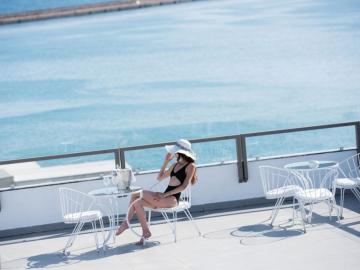
bureaucratic jungle behind those doors! The harbour and waterfront areas
are close to the typical expectation we would have of a bigger "Greek
fishing town" and fish are caught here by the - large - boatload!
You can also travel to the island of Thassos by hydrofoil ("flying
dolphin") from here - a trip of half an hour.
There are old tobacco warehouses, now finding new life as night-clubs
and shops, still perhaps offering a whiff of fine tobaccos. Kavala is
known for tobacco trading.
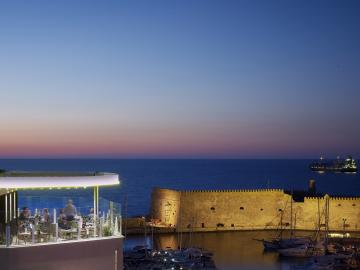
A focal point of your first view of Kavala as you approach it, is the
castle atop the hill which acts as the backdrop for the harbour, fishing
boats and the sea-side parts of the town. The Castle was started in the
5th century BC. Byzantine times saw additions.
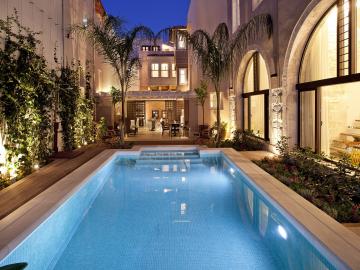
Dramatically taking the prime spot between the castle and waters edge,
perched like a jewel next to the old town on a the part of the hill, is
the monument of Imaret built in 1818 by the Viceroy of Egypt. Recently,
rather magically and flawlessly transformed into a select luxury hotel.
Its minaret-shaped dome rooftops and middle-eastern architecture makes
this a unique and valuable store of culture, architectural style,
atmosphere and history.
Below and behind the hill are the substantial remains of the ancient
aqueduct. The rather large and pleasant looking Church of the Virgin
Mary shares part of the hilltop with the castle.
There are several places to enjoy horse riding on the outskirts of
Kavala.
How to get there - Kavala
By plane to Kavala:
Kavala airport "Megas Alexandros" (code: KVA), at Chrisoupoli,
33 km from the centre of Kavala.
Or, arrive via Thessaloniki:
The biggest airport is the "Makedonia" international airport in Thessaloniki (or Salonica), code: SKG.
You can also drive, take the train or bus to Thessaloniki, depending
where you're coming from.
See details about how to get to Thessaloniki.
Then by car from Thessaloniki: 150 km (2.5-3 hours).
Where to stay - Kavala
In Kavala:
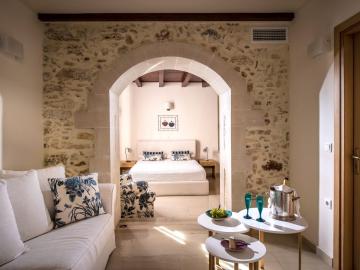
A destination in its own right: the exquisite, luxurious Monument-hotel Imaret.
Imaret Hotel - review, photos, rates &
reservations with SuperbGreece.com.
Near Eleftheroupoli:
A cabin in the mountains, great nature and views: Dasiko Horio.
Dasiko Horio - review, photos,
rates & reservations with SuperbGreece.com.
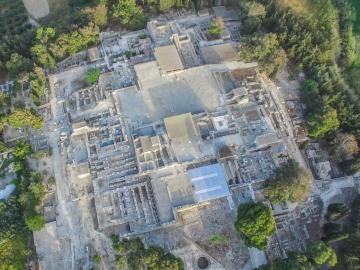
Philippi is 15 km from Kavala and a dazzling
archaeological site - easy
to get to and well worth a visit. The city of Philippi was founded by
Thasians in 359 B.C., named after King Philippi II - father of Alexander the
Great. Ancient Greek, Roman and Byzantine architecture are all visible
here on one site.
Icosifinissa is a Byzantine monastery about 45 km away on Mount Paggaio
(Pangeon)
in a gorge, near Nikisiani village with 150 cells and broad, open
courtyards, numerous rare icons, built in the 4th century.
Museums:
Archaeological Museum of Kavala:
Collections of ancient Neapolis, Philippi, Dikili-Tas, Amphipolis (Amfipoli).
Tel: 2510-222335, 224717.
Municipal Folklore Museum:
In a neoclassical building of the late 19th century.
Exhibits traditional costumes, jewels, handicrafts as well as a
collection of the Thasian sculptor Polygnotos Vagis (1894- 1965).
Archeological Museum of Philippi:
Finds of excavations (which are still ongoing) from Philippi as well as
from the pre-historic site of Dikili-Tas (finds are dated as far back as
5000 B.C.). Tel: 2510-516251.
One of the most important wetlands in Europe is nearby, the Nestos river,
just 40 kilometres east of Kavala on the border with the neighbouring
Greek county of Thrace. This runs for over 20 kilometres and you can
drive along this stretch to the rivers mouth at the sea. Some river-kayaking is also practiced here - perhaps a stunning experience of being
at one with the wildlife. See Cormorants and flamingo.
The Philippi Festival in the ancient theatre, takes place during summer
with a large selection of plays, concerts and dance performances.
Grape, potato and freedom festivals also take place! But, what should
not be missed by wine enthusiasts is the chance to follow "wine routes"
and explore the many increasingly delightful wines of the region.
Visit to Thassos Island:
Go by ferry or hydrofoil. Scenic, green (many pine trees), good beaches.
Mount Paggaion (Pangaion, Pangeon):
Peak,
1956 meters above sea level.
Covered in chestnuts and oaks.
Many springs with running fresh water, trees clinging to hilltops and
mountain slopes have the appearance of nature's bristles brushing the
crisp skies.
Known also for its ancient gold mines.
An asphalt road approaches top of the mountain. Near the top, at 1760
meters, there is a ski-run and a refuge for climbers (not always open).
Dasiko Horio is about midway
(always open!)
Beaches:
Perigiali beach - 1.5 kilometres east of the city.
Rapsani Beach (200 meters from the city).
Batis beach (3km) - water sports available.
Tosca beach (4km).
Kalamitsa (2km) - water sports available.
Further afield:
Thessaloniki, the bustling and historic capital of Makedonia. Also,
see more information about places to visit
and sights in Makedonia.
Top of page
|

A city in striking surroundings, incredible monument
-hotel, castle, buildings and focal point for exploration both now and in
historic times
|
|
|
View from fortress
|
|
|
Kavala harbour
|
|
|
Kavala fortress
|
|
|
Kavala harbour-front
|
|
|
Old walls |
|
|
Houses from another era
|
|